
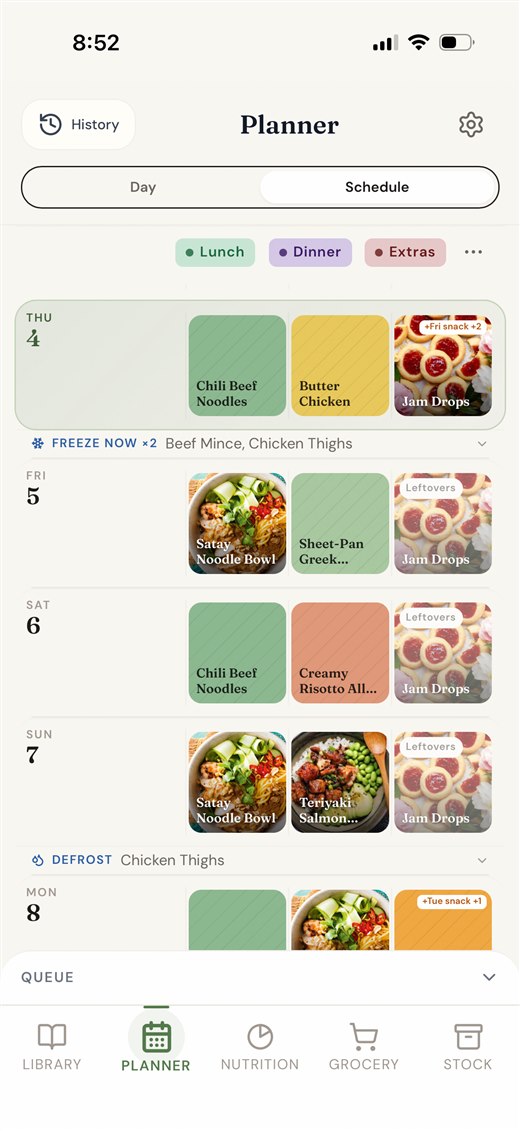
Most "healthy eating" tools assume you want to be measured: calories, macros, streaks, red numbers when you exceed a target. That works for some people. For many home cooks it creates a second job — tracking food on top of cooking food — and the shame spiral when life gets messy.
a quiet counter is a meal planner first, not a diet app. Nutrition sits alongside your week as gentle guidance: eat the rainbow, balance the plate, notice whether your plan has enough variety — without turning every meal into maths. Premium unlocks deeper nutrition views; the free tier still helps you plan real meals you will actually cook.
Why strict tracking breaks down in real kitchens
Home cooking is imprecise. You taste and adjust. You substitute what the shop had. You feed children who will not eat the sauce. Macro tracking imagines a world of exact portions; your kitchen runs on roughly right and good enough to nourish.
Diet apps also separate "health" from context: a bowl that looks high-calorie might be exactly what you need after a long run; a "clean" day on paper might be joyless and unsustainable. Health is a pattern over weeks, not a scorecard per meal.
Plan first, then notice the shape of the week
A more durable approach: plan meals you want to eat, then step back and ask whether the week looks balanced. Do you have vegetables across most days? Protein spread through the week? Too many repeats of the same starch? Enough variety that you will not bail by Wednesday?
When nutrition is attached to your actual meal plan, feedback is about the week you are about to live — not abstract targets. You adjust before you shop, not after you feel guilty.
Rainbow, plate, gut — without the lecture
a quiet counter frames health in kitchen-native language:
- Eat the rainbow — colour variety across the week, not perfection every plate.
- Balance your plate — protein, carbs, and fats in sensible proportion for your household.
- Gut health — fibre and diversity without turning dinner into a supplement schedule.
Macros exist for those who want them (Premium), but they are not the headline. The headline is: you will eat better because you planned better — fewer panic takeaways, less wasted produce, more intentional variety.
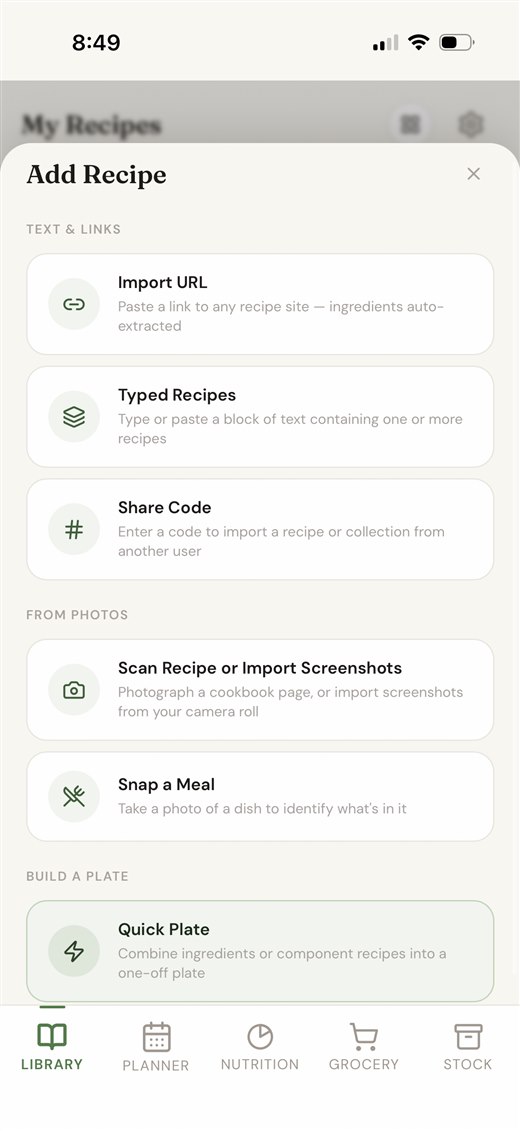
Confidence without a diet identity
You do not have to become "someone who tracks" to eat well. You can be someone who cooks most nights, shops with a list tied to real meals, and checks that the week looks reasonable before it starts. That is enough for many people — especially parents, batch cooks, and anyone who has bounced off rigid programmes before.
If you later want tighter numbers for a specific goal, the app can support that. But the default posture is calm authority: the friend who cooks beautifully and clearly has a system, not a coach shouting about your macros.
Health as a side effect of a good week
The best version of healthy eating is boring in the best way: meals you look forward to, ingredients you use up, rhythms you can keep. a quiet counter tries to make that rhythm easy — library, plan, shop, cook — so health follows from structure rather than willpower.