
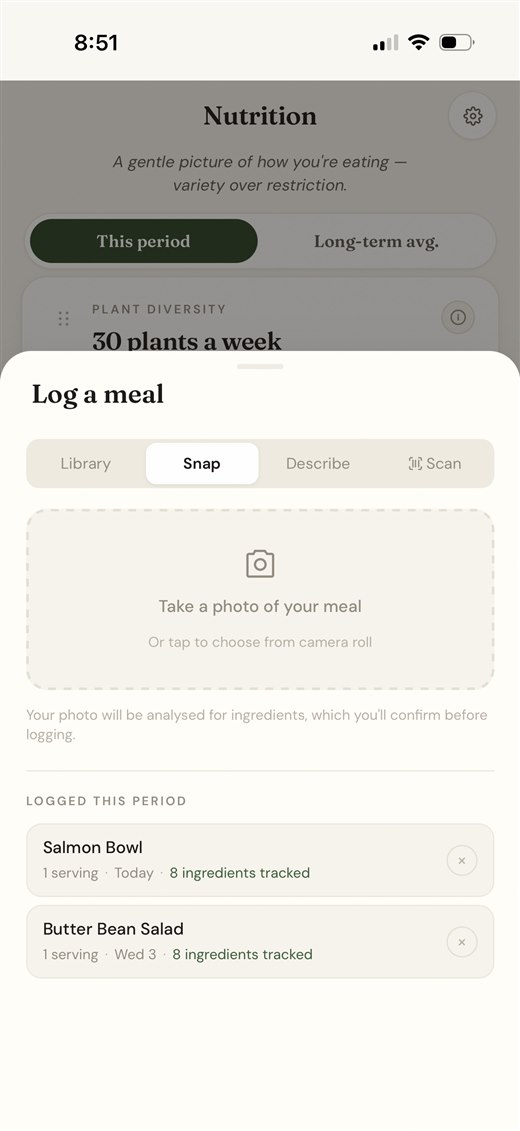
Recipes are social objects. They pass between families, survive as photos in group chats, get adapted until nobody remembers who wrote the original. Yet most apps treat sharing as an afterthought — a generic link to someone else's content, not your version with your notes and your photo from the night it finally worked.
a quiet counter starts from the idea that your library is yours: choose colours, upload photos, organise how you cook. Sharing extends that — so the people you cook for (or cook with) can see what you trust, not a feed of algorithmic suggestions.
Why sharing matters for meal planning
In many households, one person plans and another shops. Or you cook for parents, kids, or flatmates with different preferences. When the library is visible to the people involved, you spend less time re-explaining ("it's the chicken one — the one with the yoghurt") and more time executing the week.
Sharing is not about becoming a content creator. It is about alignment: everyone looking at the same plan, the same list, the same recipe card with the note that says double the garlic.
Make it yours before you share it
Personalisation is not vanity — it is memory. A photo of your actual table. A colour tag that means "Sunday project." The substitution you landed on after the shop had no mascarpone. When you build your library this way, sharing carries context that a bare ingredient list never could.
Your library is free to start. Add the recipes that define your table — the ones worth passing on — before you worry about who else needs access.
Share recipes, lists, and the week
Different moments need different sharing:
- A single recipe — send yiayia's buns to your cousin who asked for the method.
- The grocery list — partner picks up ingredients with aisle notes intact ("the good soy sauce").
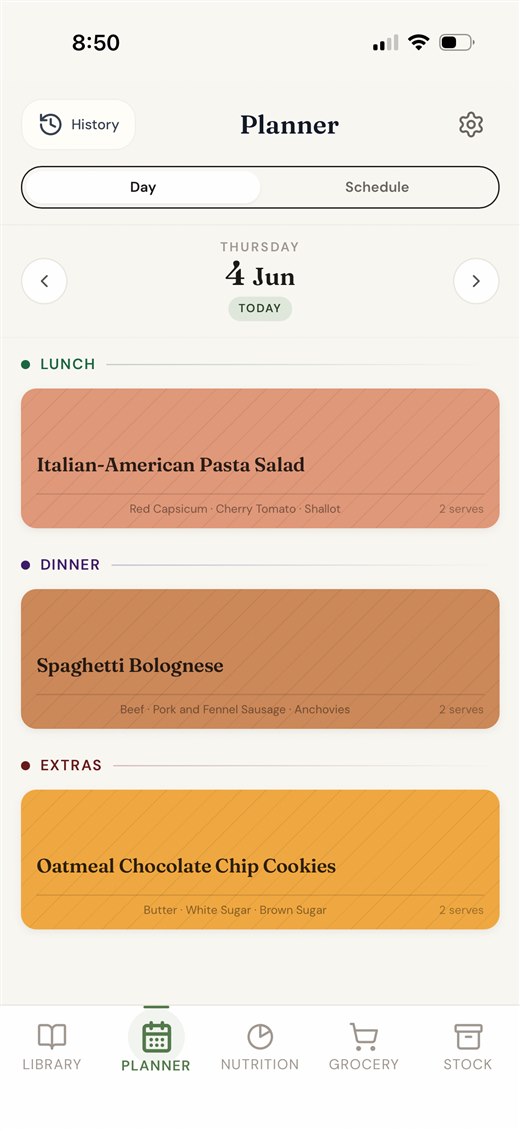
- The meal plan — everyone knows what is for dinner Thursday without another message thread.
Premium features expand how deeply you can collaborate; the free tier still lets you build a library worth sharing and plan weeks that others can follow. Details of sharing tiers are evolving — the intent is clear: your kitchen, your circle, not a public social network.
Family recipes deserve a real home
Group chats bury treasures. Paper cards fade. A shared library gives family recipes the same dignity as the blog post you saved — searchable, cookable, attached to the week you needed them. When someone asks for your mortadella sandwich build, you send the card, not a thumb-typed novel.
That is especially true for recipes that are never published online: hand-me-downs, party tricks, the thing you make when someone is sick. They belong in a tool that treats them as first-class citizens.
Quiet sharing, not performance
a quiet counter will never push you to post for engagement. No likes, no comments section, no pressure to photograph every plate. Share when it helps someone you know eat well — aligned with the same calm authority as the rest of the app.
Start with your household. Expand when it earns its place. The goal is fewer messages asking "what was that recipe again?" and more time eating together.