
Meal planning is not really about food. It is about decisions — dozens of small ones, stacked at the worst possible time, when you are tired and the fridge is half empty. The mental load is not cooking. It is choosing, reconciling preferences, checking what you have, and hoping you remembered to defrost something.
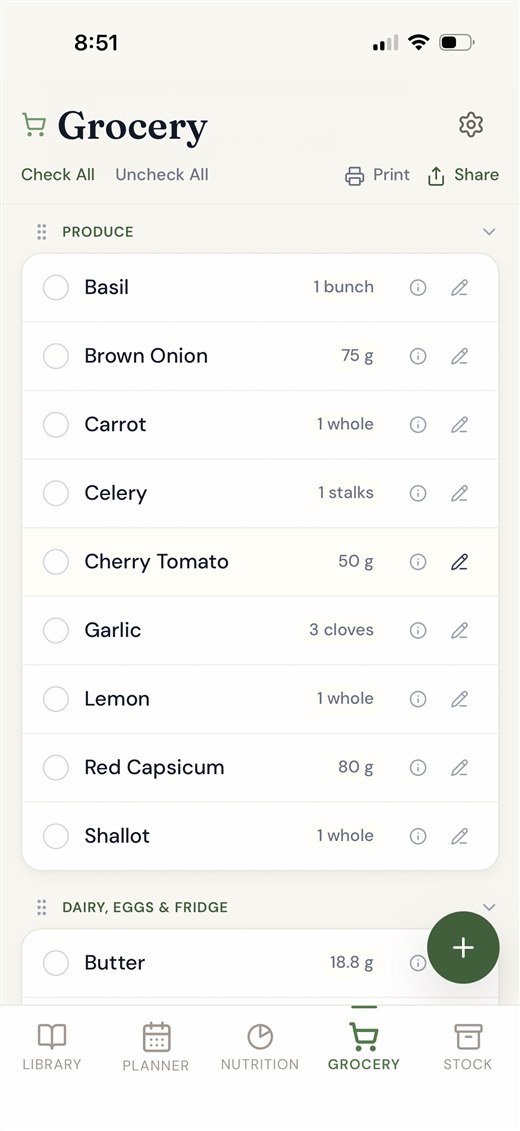
a quiet counter is built around one promise: the week fills itself. You start free with manual scheduling and a grocery list that writes itself. Premium adds Auto-Menu when you want the app to propose a full week from your library in one tap.
The Sunday spiral (and why lists alone do not fix it)
Many cooks try to solve planning with a blank template: seven empty slots, good intentions, and a vague memory of what everyone likes. That template still asks you to invent a week from scratch. It does not know your calendar, your leftovers, or that you already made pasta twice last week.
Spreadsheets help if you are meticulous, but they demand maintenance — and they do not shop for you or remind you to move chicken from freezer to fridge. The gap is not information. It is connection between plan, list, and kitchen timing.
Plan → Shop → Cook → Repeat
A workable week has four linked steps:
- Plan — meals on specific days, drawn from recipes you trust.
- Shop — one aggregated list, scaled to your household, sorted by aisle.
- Cook — reminders tied to actual meals (defrost tonight for Thursday's dinner).
- Repeat — rerun a good week when life is busy; the app learns what you keep cooking.
When these steps live in separate tools, you carry the glue in your head. a quiet counter keeps them in one loop so planning is not a creative performance every seven days.
A Sunday ritual that takes minutes, not hours
You do not need a perfect system. You need a repeatable one:
- Glance at the calendar — late meetings, sport nights, guests?
- Open your recipe library and schedule seven slots (or fewer, if you plan leftovers and takeaway honestly).
- Review the grocery list — pantry items skipped, quantities scaled.
- Send the list to whoever shops, or take it yourself.
- Done. Close the app. Drink your tea.
With Auto-Menu (Premium), step two shrinks further: the app proposes a week from your collection, seasonality, and past cooks — you swap anything that does not fit, then approve. The point is not automation for its own sake. It is getting to good enough fast, then moving on with your Sunday.
When the plan meets real life
Plans change. Someone gets sick. You eat out on Tuesday. A quiet counter expects that: swap a meal, shift leftovers, rerun last week when you are slammed. The goal is not rigidity — it is recovering quickly without rebuilding from zero.
Smart reminders (Premium) handle the timing details easy to forget: defrost protein the night before, cook fish before it turns, freeze what will not get eaten. Those nudges are tied to your schedule, not generic tips.
Less mental load, more margin
When the week is decided in advance, weeknights feel different. You are executing, not negotiating. You shop once with confidence. You waste less because ingredients were bought for named meals.
That margin — the quiet space where cooking can be enjoyable again — is what planning is for. a quiet counter simply tries to buy you that margin without turning your kitchen into a project management board.