
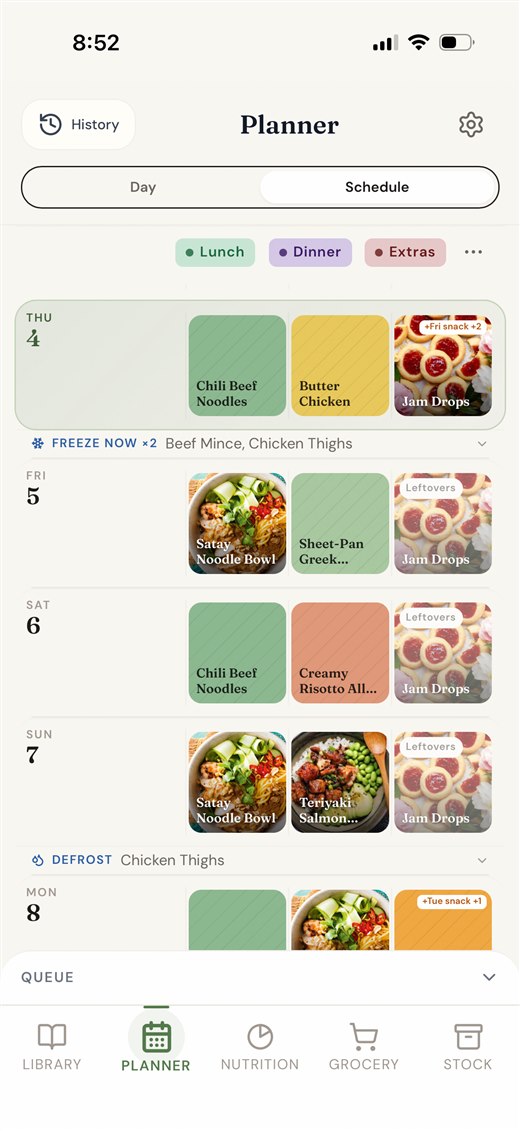
The standard diet planner asks you to weigh, scan, and log everything you eat, then watch a calorie number tick down. For a few weeks it can feel motivating. For most people it eventually feels like a part-time job, and the moment you stop logging, the whole thing unravels.
Eating well doesn't actually require that level of surveillance. Here are three sustainable ways to plan a healthier diet, ending with one that ties nutrition to the meals you were going to cook anyway.
Option 1: Intuitive eating
Intuitive eating drops external rules entirely and relearns hunger and fullness cues: eating when hungry, stopping when satisfied, without "good" and "bad" foods. For people burned out on diet culture, it can be genuinely freeing and is well supported by research.
Its limitation is that it offers no structure for the planning side. It tells you how to relate to food, but not what to put on the shopping list or how to make sure the week has enough vegetables in it. It pairs best with a planning habit, not instead of one.
Option 2: The balanced-plate method
Instead of counting, you compose: roughly half the plate vegetables and fruit, a quarter whole grains, a quarter protein, the approach behind the Harvard Healthy Eating Plate. "Eat the rainbow" works the same way, nudging variety by colour rather than numbers.
It's simple, visual, and flexible, and it scales to a whole week of meals. The only gap is feedback: a plate model lives in your head, so it's easy to think you're balanced across the week when three dinners quietly leaned beige.
Option 3: Gentle, holistic tracking (a quiet counter)
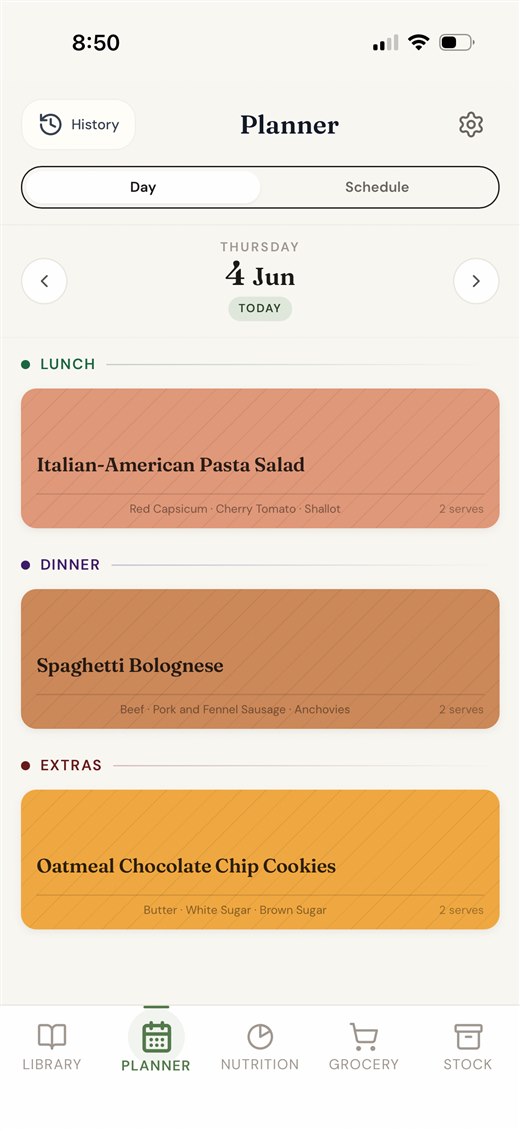
a quiet counter is deliberately not a diet app. The macros are there if you want them, but the focus is the bigger picture: eat the rainbow, balance the plate, mind your plant diversity; it draws all of it from the meals you already planned, so there's nothing to log gram by gram.
- Tracked automatically: schedule your week and the nutrition view fills itself in from those recipes.
- Holistic, not punitive: colour variety, plate balance, and plant count sit alongside macros, and every tracker toggles on or off.
- Top up in a tap: snap a photo or just describe a meal ("half a roast chicken with greens") and it's added.
Finding your approach
If numbers help you and you enjoy them, a traditional diet planner is a fine tool. But if calorie counting has never stuck, the durable path is structure plus gentle feedback: plan balanced meals, eat intuitively within them, and let an app show you the week's bigger picture without the weighing scale. Start with the recipes you love and build outward.