
Most kitchens don't lack effort; they lack a single source of truth. The recipes live in browser tabs and screenshots, the week's plan lives in your head, the shopping list lives on the back of an envelope, and what's in the freezer lives in hopeful guesswork. A kitchen planner (or "cooking organiser", if you like) is just a system that keeps those four things in one place so they stop contradicting each other.
Three ways to build one, depending on how analogue you want to go.
Option 1: A wall calendar and a magnet board
The kitchen "command centre": a weekly dry-erase board for meals, a clip for the shopping list, a notepad for what's running low. It's shared, glanceable, and satisfying to wipe clean each week.
It's also entirely manual and stuck to one wall. It won't follow you to the shops, won't track the freezer, and won't carry over; every week starts from a blank board and a blank mind.
Option 2: A kitchen binder
A step up in ambition: a ring binder with printed recipes, a weekly planner page, a master shopping list, and an inventory sheet for the pantry and freezer. Done well, it's a genuine cooking organiser.
The cost is maintenance. Printing and hole-punching recipes, updating inventory by hand, and rewriting the planner each week is real work, and the binder, like the board, can't remind you of anything or do a single calculation.
Option 3: One connected system (a quiet counter)
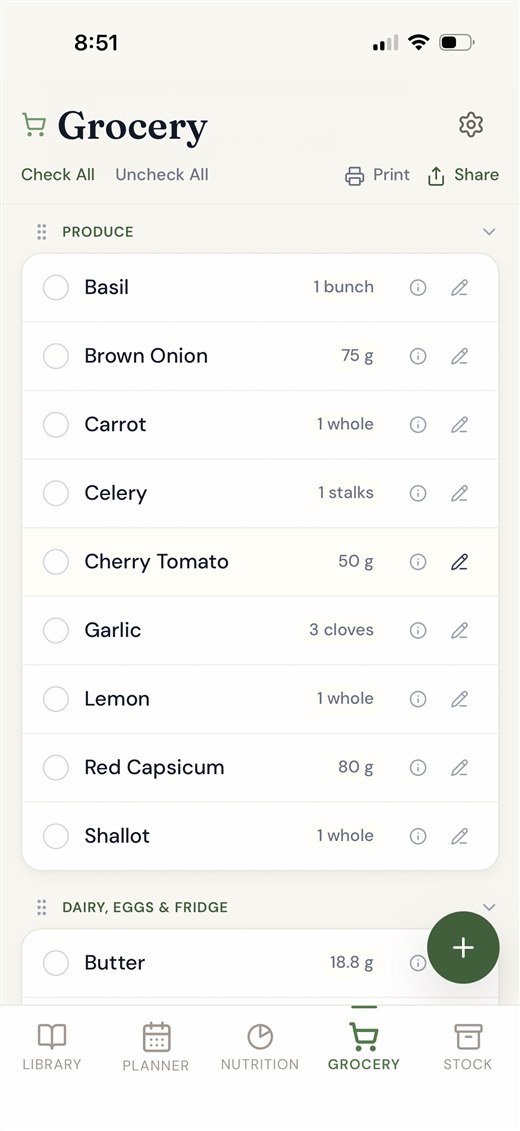
a quiet counter is a kitchen planner where the four pieces are wired together instead of just sitting next to each other. Your recipe library feeds the weekly Ledger; the Ledger writes the grocery list; the list and your stock drive freeze and defrost reminders. Change one thing and the rest updates.
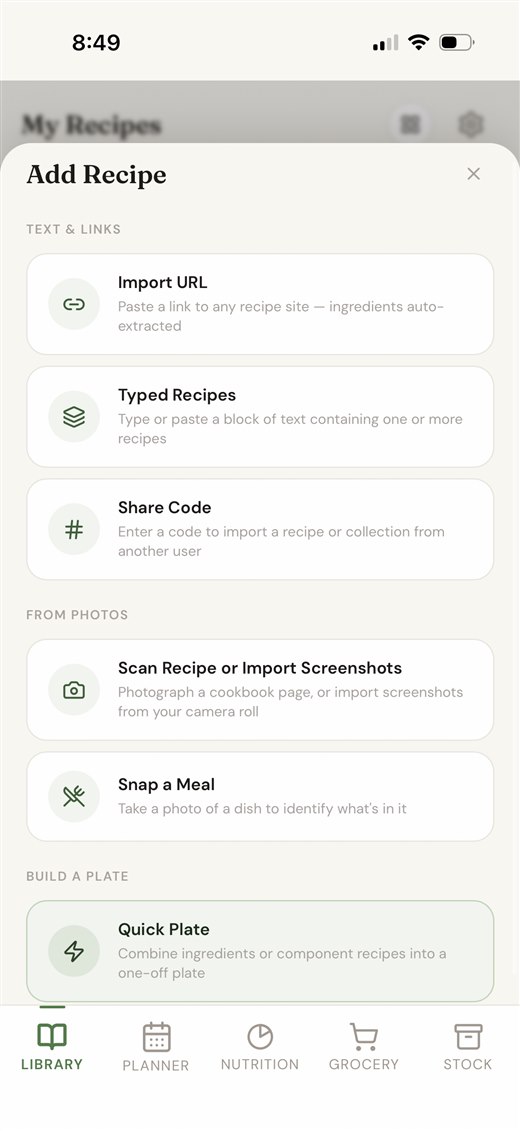
- A library you actually cook from: import from sites, photos, screenshots, even a recorded family recipe.
- A week that plans itself: Auto-Menu fills the days; repeat a good week in a tap.
- Stock & freezer tracking: know what you have, and get reminders before it turns.
- Printable menus & recipe cards: when you do want something on the fridge door.
How to set it up
Whatever system you choose, start the same way: pull your twenty most-cooked recipes into one place, plan three or four nights, and let the shopping list fall out of the plan. With a paper system you'll do the connecting by hand; with a connected app it happens for you. Either way, the win is the same: one source of truth instead of four arguing ones.